
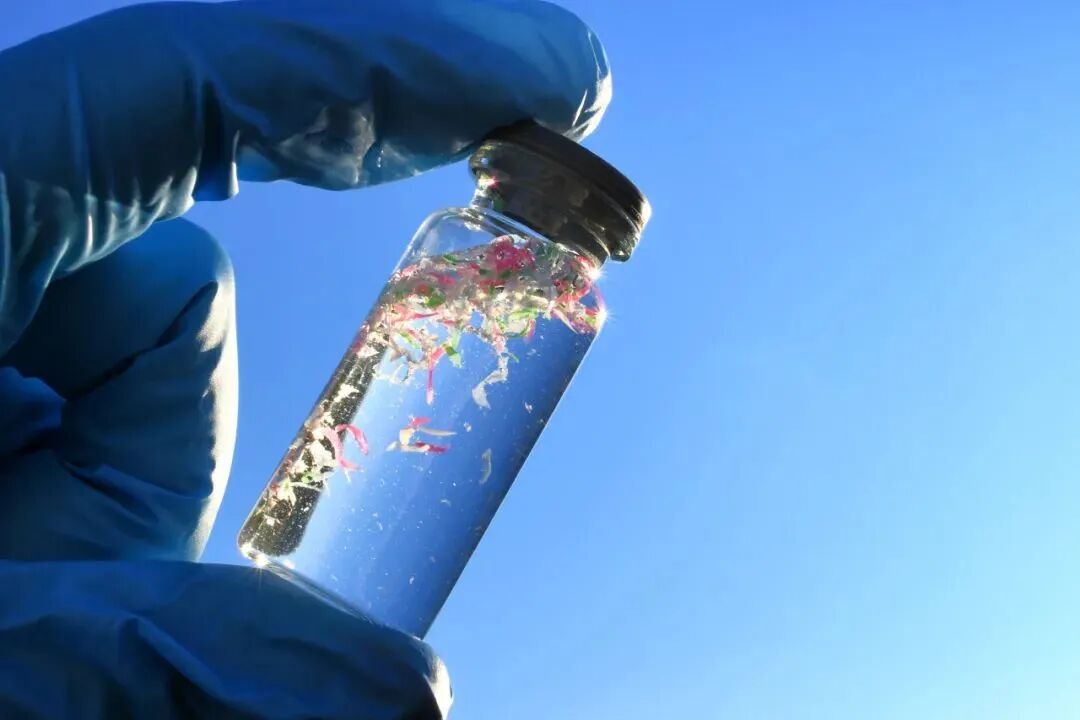
Have you ever wondered what invisible threats might be lurking in our seemingly clear rivers, lakes, and oceans? They are not silt or traditional heavy metals, but emerging contaminants such as antibiotics, microplastics, and endocrine disruptors. Like “ghosts” in the water, these substances, often effective at low concentrations, pose potential risks to ecological environments and human health.
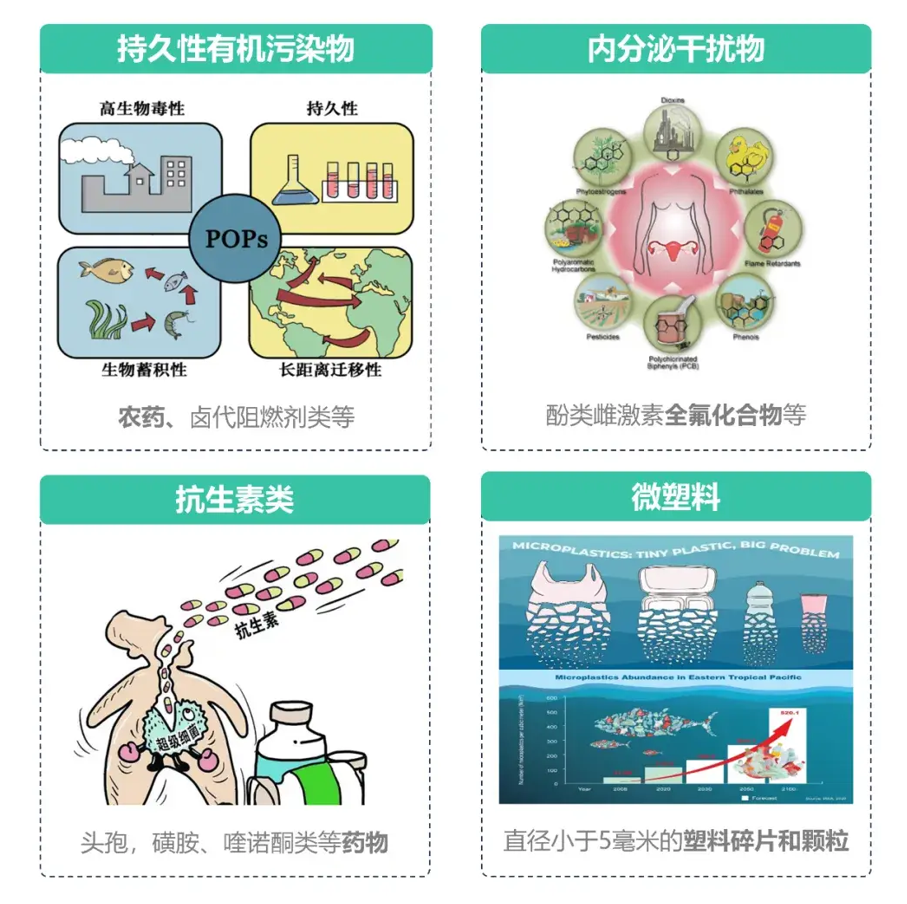
Faced with these unseen adversaries, how do we provide early warnings, trace their sources, and evaluate the effectiveness of remediation? The answer lies in acquiring a sharp eye capable of “seeing the subtle to understand the significant.” This eye is none other than a tool already common in many laboratories—the optical microscope—now entrusted with a new mission in the modern era.
1. The Call to Action: A "People's Campaign" Against Emerging Contaminants
National top-level planning has charted the course for managing emerging contaminants. The Action Plan clearly proposes to “screen, assess, and control” emerging contaminants and emphasizes the principle of “detection first.” This means that accurate, rapid, and efficient identification and monitoring of emerging contaminants form the cornerstone of the entire governance system.
Meanwhile, government bodies such as the Ministry of Science and Technology and the Ministry of Ecology and Environment are vigorously promoting the development and application of environmental monitoring technologies. Optical microscopy, as a classic technique with relatively low cost, user-friendly operation, and intuitive imaging, is entering its “golden age” of technological dissemination. It is no longer a relic in the lab but has become an advanced “reconnaissance device” in the hands of frontline sentinels.
2. The "Toolkit" for Solving Cases in the Micro World
Do you still think microscopes are only for viewing cells and bacteria? Think again! Modern optical microscopy has evolved far beyond that. Through integration with other technologies, it demonstrates astounding “superpowers” in tackling emerging contaminants.
1. The "Morphology Identifier" for Microplastics
Microplastics are a “star” among emerging contaminants and a primary battlefield where optical microscopes shine.
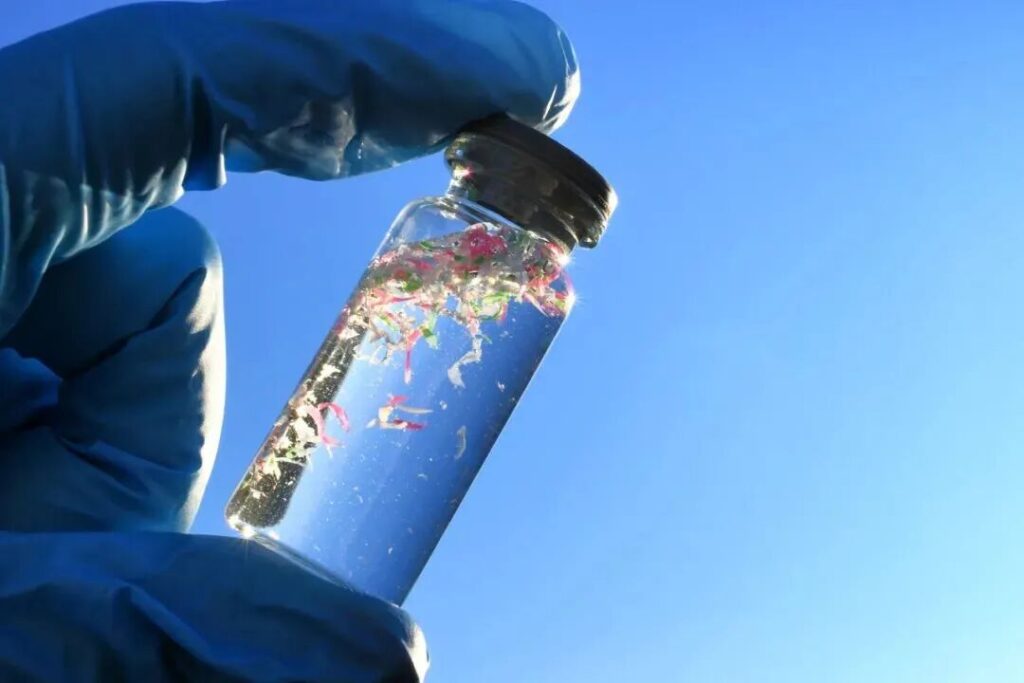
- Primary Screening & Counting: Stereomicroscopes can rapidly perform initial screening, classification, and counting of particulate matter in water samples. Based on shape (fibers, fragments, films, etc.), color, and size, we can immediately assess the pollution level and main types of microplastics.
- Precise Identification (Coupled with Spectroscopy): This is the “game-changer” for optical microscopy. When coupled with Fourier Transform Infrared (FTIR) or Raman spectroscopy, the microscope goes beyond “just seeing the surface.” Researchers can precisely locate a tiny particle under the microscope and instantly perform an “identity scan” using IR or Raman light to determine its chemical composition (e.g., polypropylene PP or polyethylene PE). This achieves a leap from “form identification” to “chemical confirmation.” This technique has become a standard in microplastics research published in domestic and international environmental journals.
2. The "Sentinel" for Aquatic Microbial Ecology
Emerging contaminants can disrupt the ecological balance of aquatic microorganisms, and changes in microbial communities serve as a “barometer” for aquatic ecosystem health.

- The Power of Fluorescence Microscopy: Using specific fluorescent dyes, fluorescence microscopy can “light up” live bacteria, dead bacteria, or specific functional microorganisms in water samples. By observing changes in their quantity, activity, and community structure, we can indirectly yet very intuitively assess the stress effects of emerging contaminants on aquatic ecosystems. For example, a sharp decline in nitrifying bacteria in an area following the discharge of a specific contaminant directly signals a decrease in the water body’s self-purification capacity.
3. The "On-site Referee" for Treatment Efficacy
When developing new water treatment technologies (e.g., advanced oxidation, novel adsorbent materials), how do we quickly judge their effectiveness?

- Direct Observation of Adsorption: Researchers can use microscopes to observe in real-time how colored dye pollutants or labeled emerging contaminants in water are rapidly captured and aggregated upon adding new adsorbent materials. This direct visual evidence, more impactful than mere data curves, significantly accelerates the R&D process for pollution treatment materials.
- Assessing Advanced Oxidation Degradation: For contaminants degraded by microorganisms, the effectiveness of biodegradation technologies can be rapidly evaluated by microscopically observing the formation of biofilms by degrading bacteria, bacterial density, etc.
3. A "Technology Investment Guide" for Water Professionals
Compared to large-scale analytical instruments costing millions (e.g., LC-MS systems), optical microscopes offer tremendous value for widespread adoption:
- Cost-Effective & Easy to Popularize: Basic microscope setups are relatively low-cost and simple to maintain, making them highly suitable as standard equipment for grassroots environmental monitoring stations, water treatment plants, wastewater treatment plants, universities, and research institutes.
- Intuitive Operation & Quick to Master: The training period is short, enabling frontline technicians to learn quickly and achieve “immediate application.” This greatly enhances the deployment speed and responsiveness of monitoring networks.
- Simple Sample Prep & High Efficiency: For rapid screening of particulate pollutants like microplastics, microscopic methods involve relatively simplified pre-treatment procedures, enabling high-throughput sample analysis. They are ideal tools for large-scale, routine screening.
- Powerful Tool for Science Communication & Education: Images and videos from the micro world are the most powerful tools for demonstrating the presence and hazards of emerging contaminants to the public and policymakers, significantly raising environmental awareness across society.
4. MSHOT Solutions
Microplastics Morphology Identification
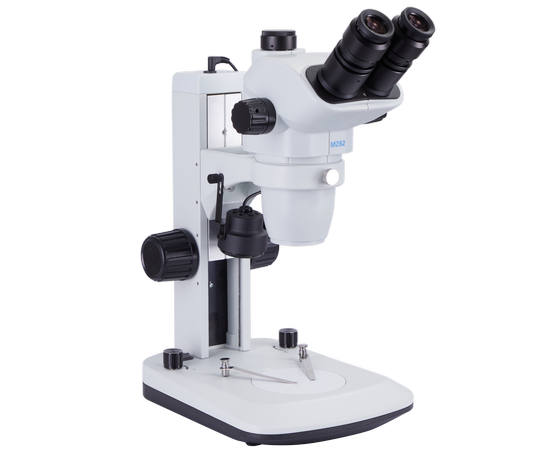
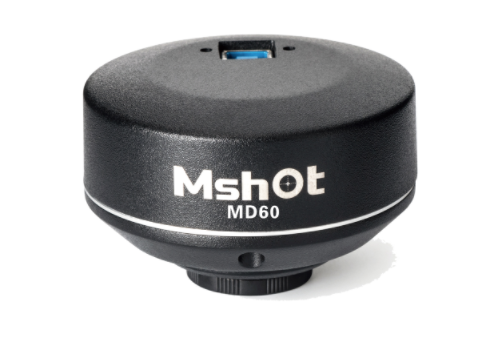
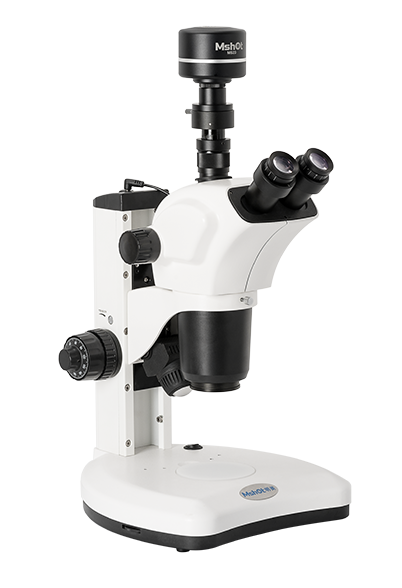
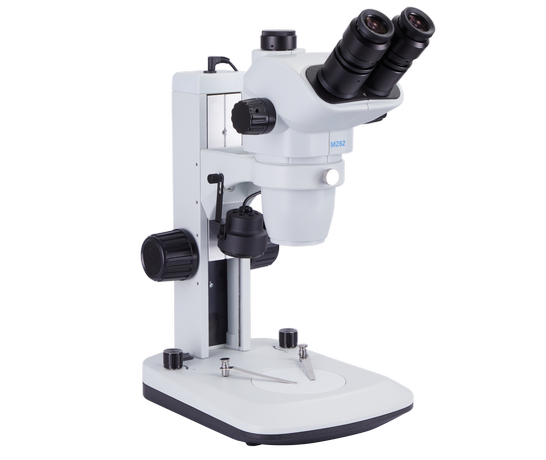
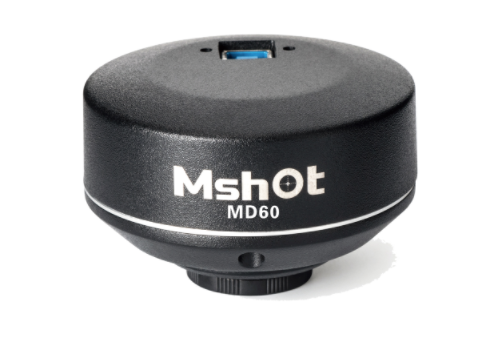
For Primary Screening & Counting: We recommend the MSHOT stereo microscope MZ101 or MZ62 paired with the MD60 microscope camera.
Cost-effective and user-friendly, they feature ergonomic design, high-brightness white LED illumination, and support transmitted, reflected, and transmitted/reflected illumination modes. They enable rapid preliminary screening, classification, and counting of particles in water samples.
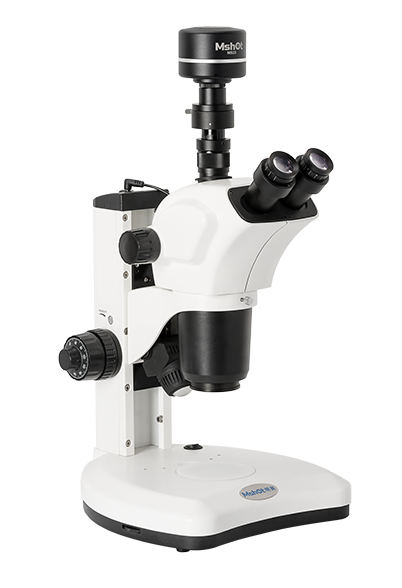
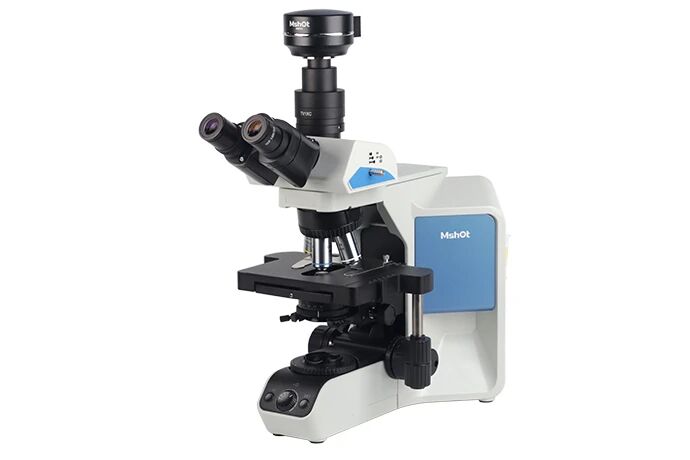
For Precise Chemical Identification: We recommend the MSHOT research-grade microscope ML51-N coupled with an FTIR spectrometer.
Equipped with semi-apochromatic objectives offering high numerical aperture and light transmittance, it allows clear observation of microscopic morphological structures (e.g., cells, particles, contaminants, cross-sections of multilayer materials) in visible light mode. By adjusting the aperture diaphragm, a specific micro-region of interest (as small as a few micrometers) can be precisely selected for immediate FTIR spectral acquisition, providing instant chemical composition information for that spot.
Aquatic Microorganism Detection
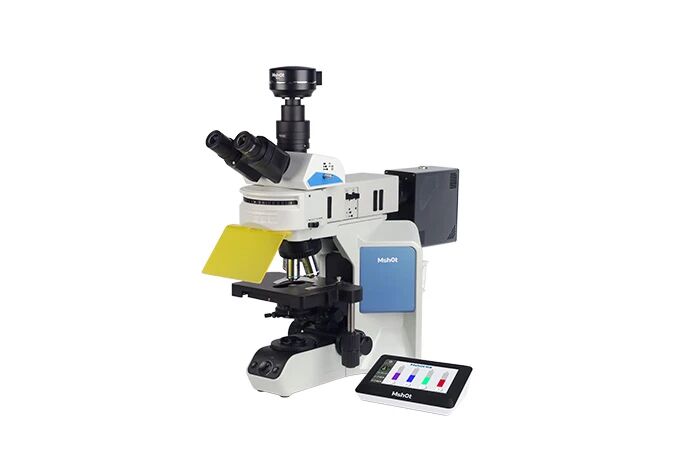
We recommend the MSHOT fluorescence microscope MF43-N paired with the MSX3 microscope camera. It features a 6-port epi-fluorescence module and ultra-long-life LED fluorescence illumination. The semi-apochromatic fluorescence objectives and highly sensitive fluorescence performance ensure sharpness, clarity, and color fidelity in captured images. Applications include using SYTO 9/PI to distinguish live/dead bacteria (green/red), DAPI to label total bacterial counts, or employing FISH technology with fluorescent probes to precisely locate specific functional microbial groups.
Treatment Process Observation
We recommend the MSHOT stereo microscopes MZ101 or MZ62 paired with the MD60 microscope camera. With long working distance, cost-effectiveness, and simple operation, they support transmitted, reflected, and transmitted/reflected illumination modes. They are suitable for observing processes such as the rapid capture of emerging contaminants by novel adsorbent materials and the microbial degradation of emerging contaminants.
5. Conclusion
Managing emerging contaminants is a protracted battle crucial for our future. We need both sophisticated “national strategic instruments” for in-depth analysis and flexible, accessible, reliable “conventional tools” like Guangzhou MSHOT microscopes for wide-area reconnaissance.
Let’s re-polish this familiar scientific instrument and entrust it with a new mission. Through the keen “eyes” of MSHOT microscopes, we will expose those hidden “invisible threats” in our waters, translating national policy blueprints into concrete, visible governance actions.
To perceive the grand through the minute, to know the season by a single leaf. Let us use the trustworthy microscopic “eyes” from MSHOT to jointly safeguard the clarity and safety of every drop of water upon which our lives depend.