Home » Microscopy Applications in CDC Microbiological Testing Laboratories
Guardian of Food Safety: Applications of MSHOT Microscopes in NMPA Food Safety Evaluation Laboratories
As food safety issues attract increasing public attention, food safety regulation has become a critical part of protecting public health. As an important component of national food safety supervision, the Food Safety Evaluation Laboratories of the NMPA are responsible for the whole-process monitoring from raw materials to finished products.
In this process, the microscope, as one of the fundamental and core instruments, plays an indispensable role. Through high-resolution imaging technology, microscopes provide scientific and accurate data support for food safety evaluation, ensuring that food meets safety standards in all links including production, processing and circulation.
Applications of Microscopes in Food Safety Evaluation
Food Safety Evaluation Laboratories of the NMPA mainly use microscopes for microbial contamination detection, parasite detection, and illegal additive screening—all critical steps in ensuring food safety.
Challenges of Microscopic Imaging in Food Safety Testing
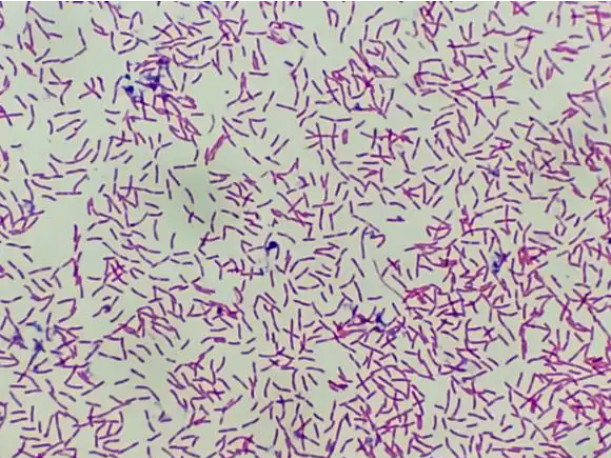
In food safety testing, the detection of microbial contamination and parasite eggs mostly relies on brightfield microscopy. Food contains a wide variety of microorganisms with small sizes and variable quantities, which demands high resolution for microscopic imaging.
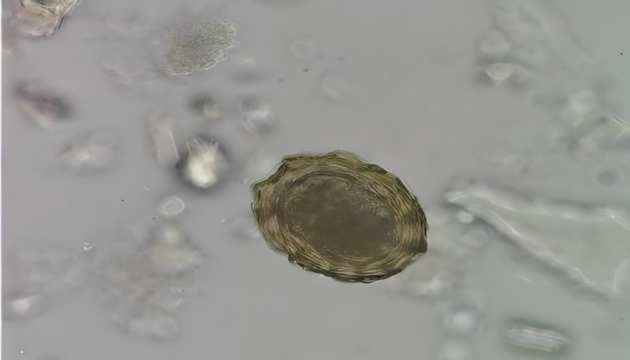
Parasite eggs are small and often mixed with other components in food, requiring microscopes to clearly distinguish subtle structural differences—especially in meat samples, high contrast and image clarity are essential.
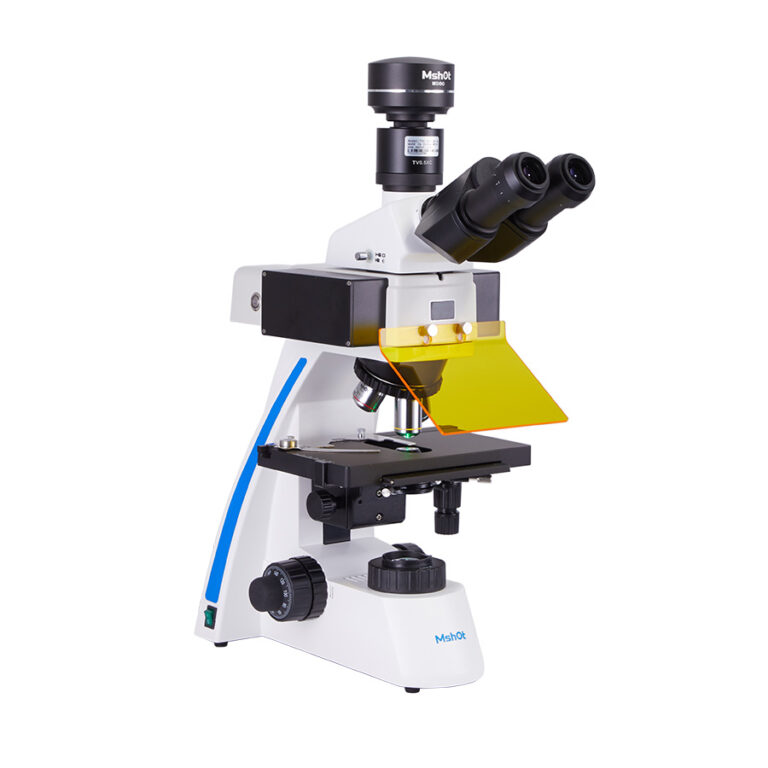
Finally, for illegal additive screening, low-concentration samples typically depend on fluorescence microscopy. This requires microscopes to possess excellent fluorescence imaging capabilities to accurately identify and locate tiny dye particles.

Brightfield Preliminary Screening Solution for Food Microbial Contamination / Parasite Eggs / Illegal Additives
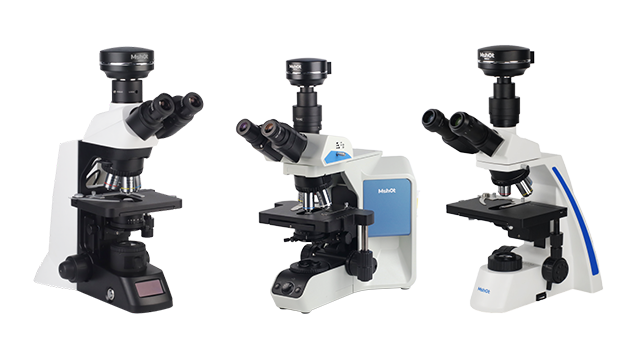
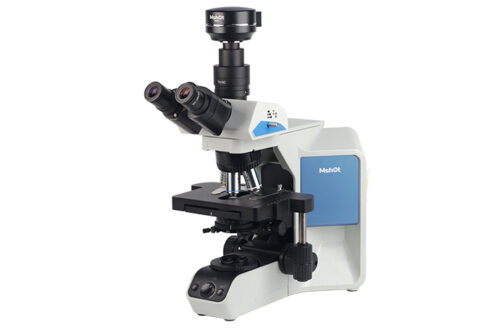
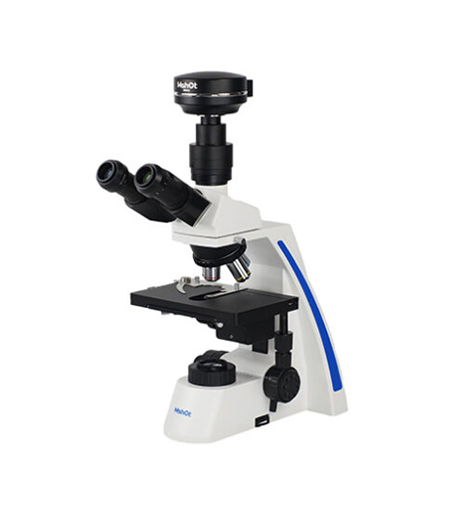
Upright biological microscopes ML31 / ML45 / ML51-N (oil immersion) + microscope cameras MD60 / MDX10.
Suitable for bacterial and microbial colony counting, as well as morphological observation of bacteria, parasites, and illegal additives.