Home » Microscopy Applications in Occupational Health Laboratories of CDC
Circulating Tumor Cell Detection (CTC Detection)
CTC is the abbreviation for Circulating Tumor Cells. CTC detection is a clinical pathological technique of liquid biopsy, which can be applied to cancer screening, evaluation and monitoring.
Using peripheral blood as the sample, CTC detection can guide targeted therapy for patients with deep-seated tumors where needle biopsy carries risks. It also provides important references for cancer prognosis assessment, therapeutic efficacy monitoring, and cancer recurrence risk evaluation.

CTC Detection (Circulating Tumor Cell Detection)
CTC detection is applied to epithelial tumors, such as gastrointestinal cancer, skin cancer, etc.
The detection process consists of four steps: enrichment, CD45 staining for white blood cells, CK staining for CTCs, and DAPI staining for cell nuclei.
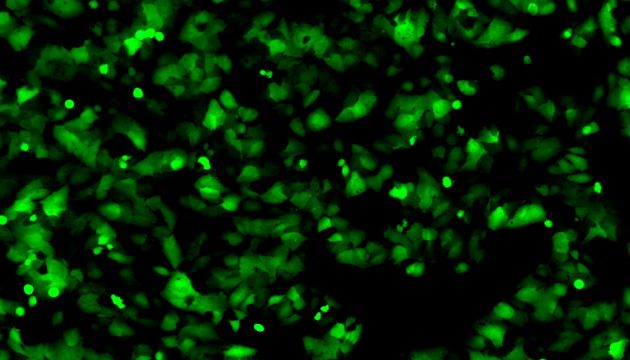
Cells with DAPI-positive, CK-positive, and CD45-negative fluorescence, along with large nuclei, are identified as CTCs. Cells with DAPI-positive and CD45-positive fluorescence are white blood cells.
Challenges in CTC Detection (Circulating Tumor Cell Detection)
CTC detection faces three major challenges: poor instrument universality, cumbersome multicolor fluorescence slide review, and difficulty in high-sensitivity imaging.
New technologies such as microfluidic chips are expected to replace dedicated instruments and improve enrichment efficiency. The use of a motorized fluorescence microscope combined with microfluidics enables more efficient CTC imaging and slide review.
In addition, to meet the requirements of high-sensitivity imaging, it is recommended to equip with high-quality LED light sources, high-efficiency filters, semi-apochromat or higher objectives, and high-sensitivity cameras.
Solutions for CTC Detection (Circulating Tumor Cell Detection)
The following solutions are recommended for CTC detection:
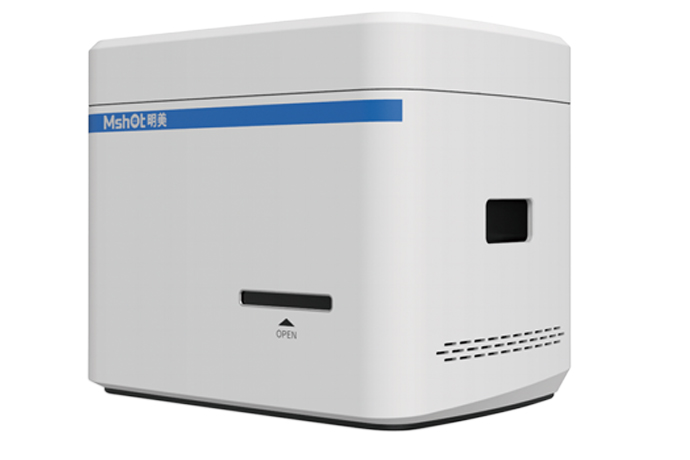
① MES200 Multiplex Fluorescence Scanning System: Supports 1–5 slides with one-click scanning, highly efficient and automated.
② Motorized Inverted Fluorescence System: Integrates multiple functions and is suitable for integrated development.
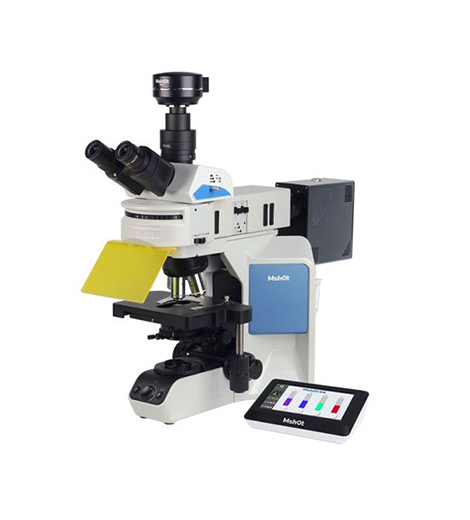
③ MF43-N Research-Grade Fluorescence Microscope: Features high fluorescence efficiency, ideal for R&D and slide scanning in microfluidics and biochip applications.