
Many people have the same question: How do I buy an inverted microscope? With so many models and parameters, it’s easy to get overwhelmed… Don’t worry, today I’ll share a beginner-friendly guide to help you avoid common mistakes and make the right choice!
What is an Inverted Microscope?
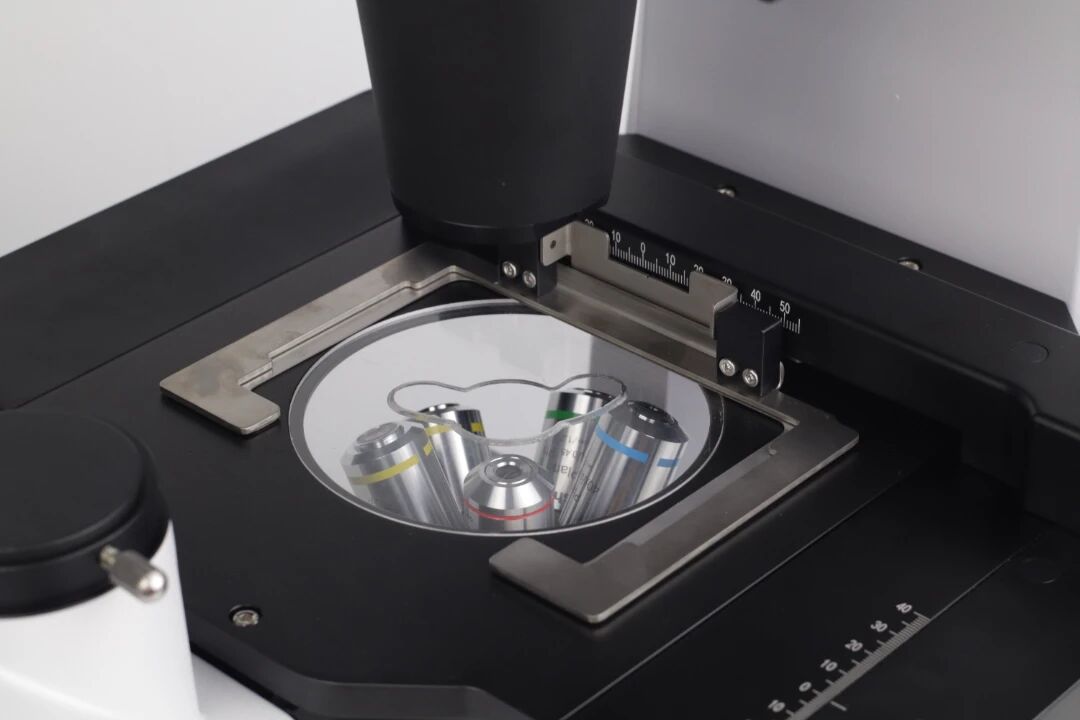
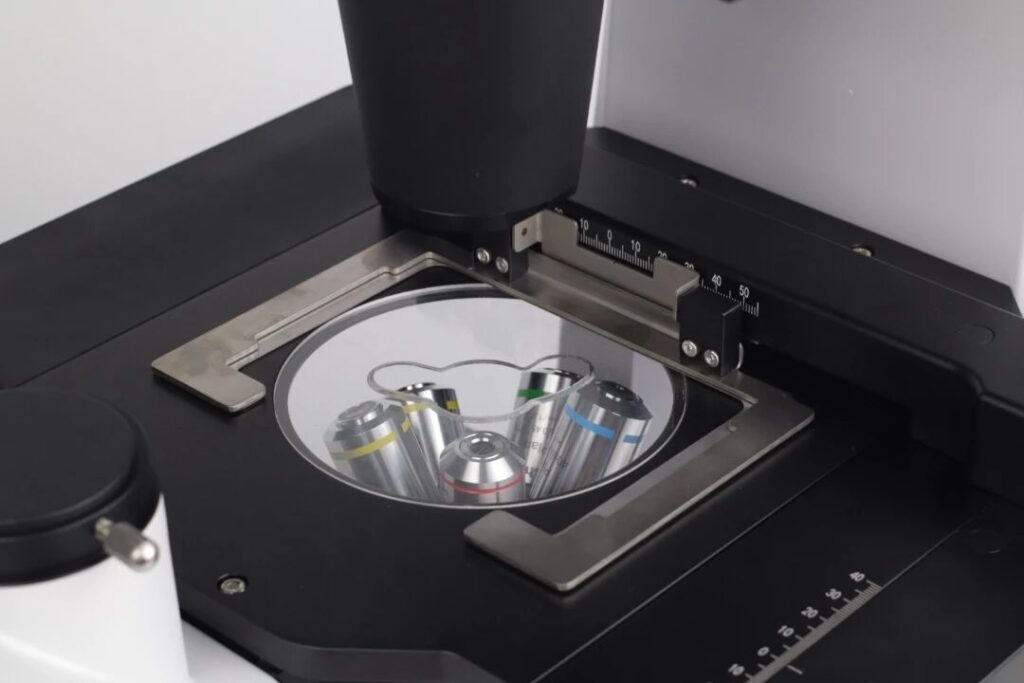
Simply put, in an inverted microscope, the objective lenses are positioned below the stage, and the sample is placed above it.
Inverted microscopes are mainly used for biological experiments like microbiology, cell observation, and tissue culture. Compared to upright microscopes, their greatest advantage is the ability to directly observe samples in culture dishes or flasks without the need for frequent sample removal, which is more cell-friendly.
Common Mistakes for Beginners — Have You Made Any of These?
- Overlooking optical parameters and just focusing on price when placing the order;
- Not understanding the actual purpose, resulting in a purchase that doesn’t suit cell experiments;
- Neglecting the completeness of accessories, which later adds complications and costs for additional purchases.
How to Evaluate Key Parameters?
Magnification
Standard configurations typically come with 10×, 20×, and 40× objectives, which are suitable for most cell observation needs. For more detailed observation (such as internal cell structures), consider adding a 60× or 100× oil immersion objective (be sure to consider the working distance of the objective and the thickness of the culture material’s bottom, and seek advice from a professional microscope engineer).
Numerical Aperture (NA)
At the same magnification, the higher the NA value, the better the resolution and the clearer the image. This is one of the critical parameters for determining imaging quality. You should balance the NA selection based on your resolution and working distance needs.
Light Source Type
LED Light Source: Long lifespan, energy-saving, minimal maintenance required. Ideal for beginners.
Halogen Light Source: Soft light but generates more heat, and the bulb needs to be replaced periodically.
It’s recommended to opt for LED light sources for convenience and durability.
Phase Contrast and Fluorescence Functionality
Phase Contrast: Essential for observing colorless and transparent live cells.
Fluorescence: Used for molecular labeling, immunofluorescence, etc.
If you are not planning on fluorescence experiments initially, you can skip it, but it’s advisable to select a model that can be upgraded for fluorescence functionality in the future.
Ease of Operation
Is the focusing smooth? Does the stage move steadily and smoothly?
Some microscopes can cause hand fatigue with long-term use, so it’s a good idea to try out the microscope in person if possible.
How to Choose Without Hesitation?
For Beginners/Students
Configuration: Basic LED light source + Phase contrast functionality
Features: Cost-effective, suitable for daily experiments and coursework.
For Research/Scientific Users
Configuration: High NA objectives + Phase contrast/fluorescence modules
Features: High image quality, strong expandability, suitable for complex experimental needs.
For Businesses/Inspection Institutions
Configuration: Strong stability + Support for multi-user operation
Features: It is recommended to choose a reputable brand with reliable after-sales service.
Helpful Tips
Don’t be deceived by “super high magnification” – image clarity is more dependent on the overall performance of the optical system;
Check whether the microscope supports future upgrades (such as fluorescence, camera interface, etc.) to accommodate future experimental needs;
After-sales service is crucial, as reliable brands can save significant costs on future maintenance.
In Summary:
Choosing an inverted microscope = Clearly defined needs + Understanding key parameters + Planning for future upgrades. Make the right choice now, and your experiment efficiency will double!
Product Recommendation
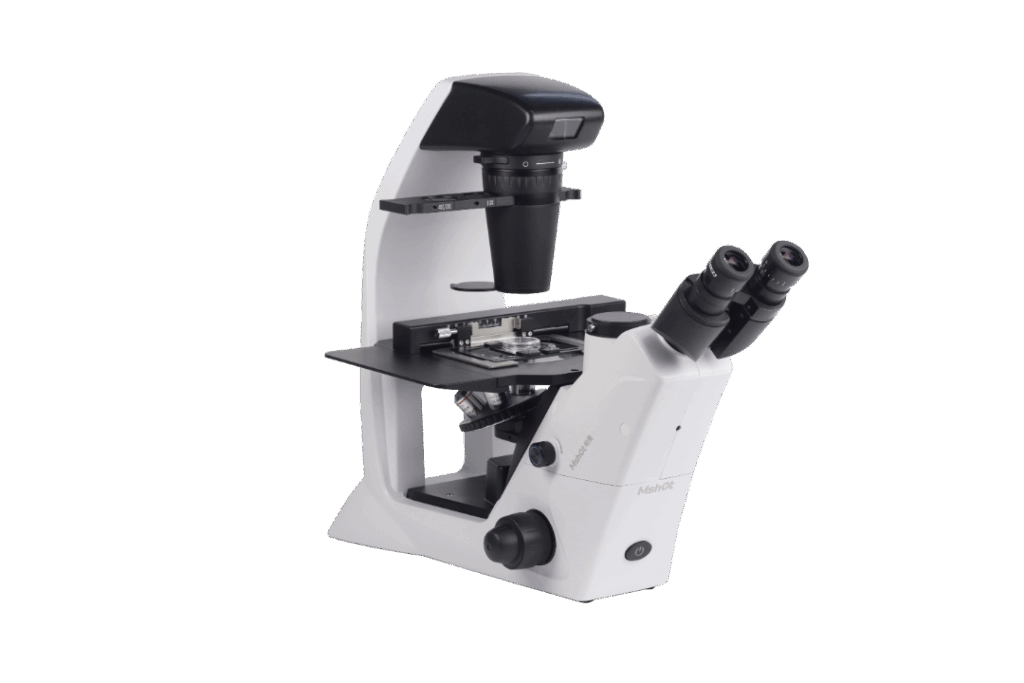
If you’re looking for a reliable, practical, and cost-effective inverted microscope, consider the MSHOT MIX60:
- Standard LED light source with long lifespan, no frequent bulb replacements, energy-saving, and hassle-free.
- Supports phase contrast for clear live cell imaging with high contrast.
- Objective numerical aperture of 0.4 or above ensures high-resolution imaging.
- Smooth operation with a comfortable focusing experience, even with long-term use.
- Smart modules, with a digital display showing the current light intensity and objective magnification in real-time.
- Expandable functionality, with optional fluorescence modules, allowing future upgrades.
Whether you’re a student conducting routine cell observations, or a researcher in need of a stable and high-performance microscope, the MSHOT MIX60 is a great value and an excellent choice for your laboratory!